A commercial service
Commercial bird control in Auckland
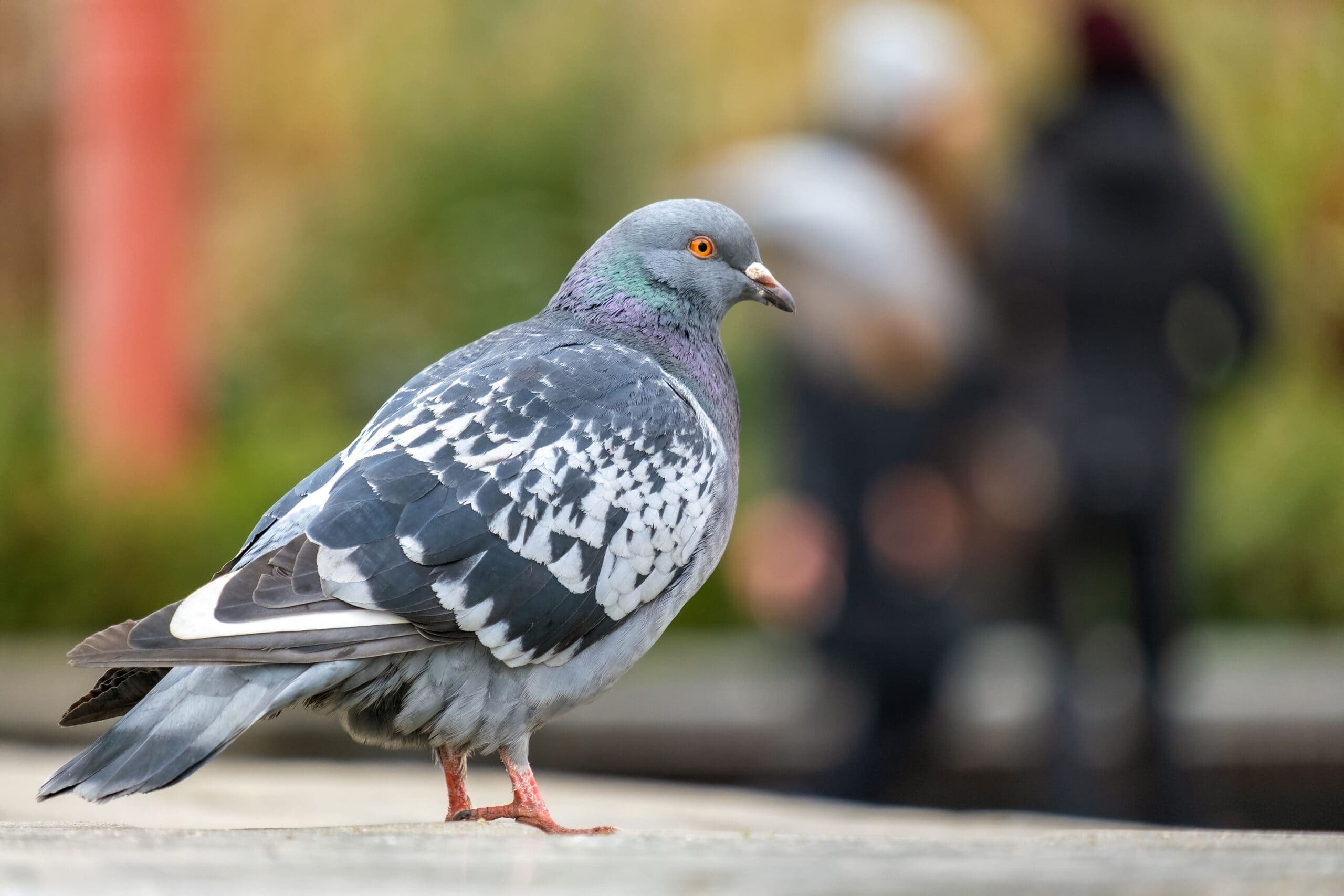
Pigeons, mynas, sparrows and starlings roosting on a building are rarely a bird problem - they are a droppings problem. Acidic mess that damages your roof and signage, a health risk once it dries, and a bad first impression right at your entrance. We deal with it by making the roost unavailable, not by chasing the birds.
Why birds are a commercial problem
The birds themselves do little damage. The droppings do all of it, and on a commercial building they hit three things at once - the fabric of the building, the health and safety of the people using it, and the impression it makes on your customers.
- Acidic droppings damage roofing, cladding, signage and vehicle paint
- Dried droppings carry organisms associated with respiratory illness
- Nesting material blocks guttering - a water-ingress and fire risk
- Nests bring in mites and insects that then move into the building
- Droppings at an entrance are a slip hazard and a poor first impression
Signs it’s time to act
- Droppings building up on ledges, roofing, signage or entranceways
- Nesting material in gutters, downpipes and roof voids
- Persistent noise from a roof space, especially early morning
- Feathers and debris around a building entrance
- Blocked or overflowing spouting
The methods we use
Bird control is proofing work. The aim is to make the roosting or nesting site unavailable so the birds move on and don’t come back, which lasts where scaring them off doesn’t. Which method does that depends on the building.
Site survey
Work out what is actually happening before anything is fitted
Every bird job starts here. Which species, where they are roosting versus nesting, what is drawing them, and what access there is for the work. The right method depends entirely on the answers, and getting this wrong is why so much bird proofing fails within a year.
Best for: Every site, before any quote is given
Bird netting
Complete exclusion from an area, not just a surface
Netting closes off a whole void rather than making one ledge uncomfortable. Tensioned on a wire frame and fitted to the building line, it stops birds reaching a courtyard, an atrium, a loading bay or an undercroft at all. Done properly it is close to invisible from the ground and lasts for years.
Best for: Loading bays, undercrofts, atriums, plant rooms, large open voids
Bird spikes
Makes a ledge unusable, quickly and cheaply
Stainless spikes on a polycarbonate base, fixed along the surface birds are landing on. They do not hurt the bird - they simply remove the flat surface it needs to settle on. Fast to install, low cost, and the usual answer on a narrow ledge or a length of parapet.
Best for: Ledges, parapets, sills, beams, signage tops, pipework runs
Post and wire systems
Discreet deterrence where the building has to still look right
Fine tensioned wire on low posts, set at the height a bird lands. It gives an unstable perch so the bird moves on, and from street level it is very hard to see. This is usually the answer where spikes would be too visible - a retail frontage, a heritage facade, a hotel entrance.
Best for: Customer-facing frontages, heritage buildings, clean architectural lines
Roof and gap proofing
Closing the way in, rather than the place they sit
Where birds are getting into a roof space, a wall cavity or behind signage, deterring them off a ledge does nothing. This is exclusion work: closing gaps at eaves, soffits, broken tiles, missing flashing, vents and service penetrations so the cavity stops being available.
Best for: Roof voids, eaves and soffits, behind signage, service penetrations
Guano clean-up and decontamination
The half of the job that protects people
Dried droppings should never be swept or blown - that puts the particles into the air, which is exactly the health risk. Affected areas are treated and removed safely, then the surface is decontaminated. Proofing without this leaves the staining, the smell and the hazard exactly where they were.
Best for: Entranceways, walkways, plant rooms, anywhere with build-up
Choosing the right method
There is no single best system. There is a best system for your building, and these are the three things that decide it.
What the surface is
A narrow ledge, a wide parapet, a whole open void and a roofline gap are four different problems. Spikes suit a ledge and do nothing for a void; netting closes a void and is overkill on a sill.
Whether people see it
On a warehouse, nobody cares what the proofing looks like. On a retail frontage, a hotel entrance or a heritage facade, it has to disappear - which usually points at wire rather than spikes.
Roosting or nesting
Birds resting on a ledge move on once the ledge is uncomfortable. Birds nesting inside a roof void will keep working at the gap, so that job is exclusion, not deterrence.
We only work on introduced pest species
Native birds are protected under the Wildlife Act and we do not touch them. Our work is limited to feral pigeons, Indian mynas, sparrows and starlings. If you are not certain what you have, we identify it at the survey before anything is proposed.
Common on these sites
Anywhere with ledges, signage and a steady footfall of people - which is most commercial frontages.
Qualified, accredited and accountable
 National Pest Management Association
 Pest Management Association of NZ
 Site Safe member
Commercial bird control - common questions
Which birds can actually be controlled?
Are bird droppings really a health and safety issue?
Will netting or spikes look bad on a customer-facing building?
Do you handle the cleaning as well as the proofing?
Do you work with facilities and property managers?
Birds on your building?
We'll survey the site and recommend the right proofing - request a survey.