
Borer treatment in Auckland
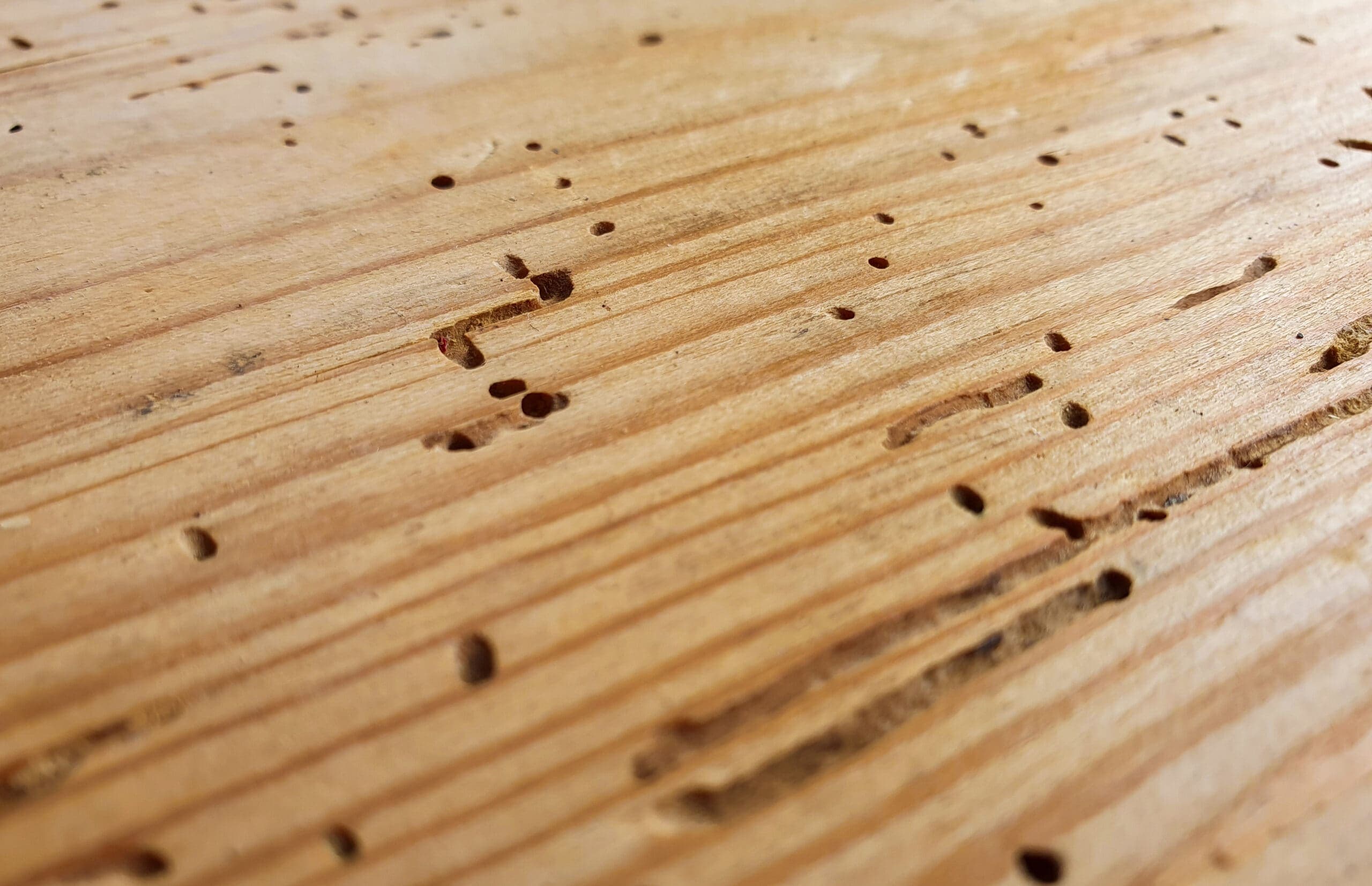
Borer prefer seasoned or moist, untreated timber, which makes older Auckland homes a natural target - especially in damp areas, on the south side of a building, and in floor timbers that hold moisture. By the time you notice the flight holes, the larvae have usually been working inside the wood for years.
How do I know it's active?
Look for frass - fine, gritty, orange-ish dust around small holes. Frass means borer are working in there now.
Is it dangerous?
Not to people. Borer don't bite or carry disease. They weaken structural timber over time, which is the real cost.
How long does treatment last?
Ten years or more in normal conditions. We use borate powders that diffuse into the wood and don't break down.
How to tell if you’ve got borer
The giveaway is frass - the powdery waste borer push out as they tunnel. It looks like fine sawdust with a yellow or orange cast and feels slightly gritty between your fingers. Frass around a hole means borer are working in there now, not years ago.
What to look for
- Small piles of frass - fine, gritty, yellow-orange dust
- Frass trailing down from holes in the timber
- Frass settling on things stored in the affected area
- Small round or oval flight holes in the timber
- In bad cases, visible damage to the structure of the wood
It’s completely normal for borer to attack some boards and leave the ones beside them alone - the untouched ones are usually harder heartwood. Borer prefer soft sapwood and untreated timber, which is why untreated native timbers in older homes are so often affected, and sawn timber more than smooth-finished.
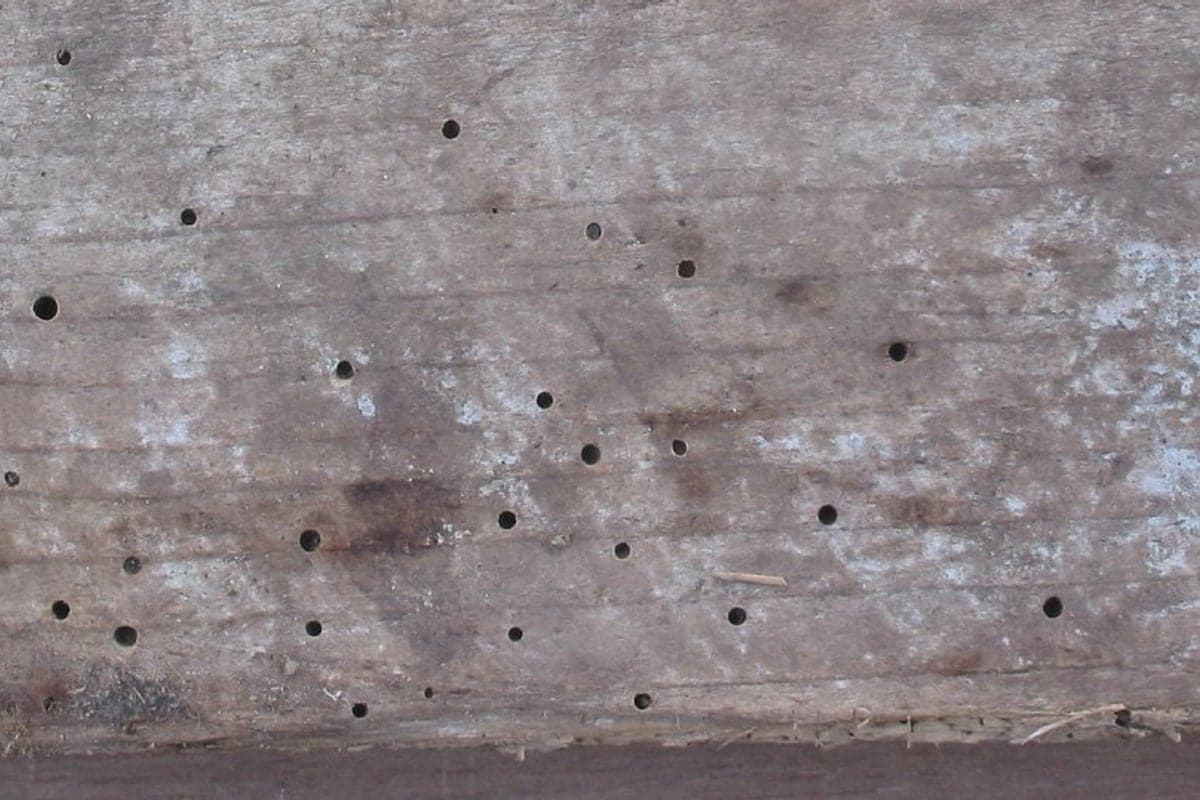 Flight holes in timber
 What untreated timber damage ends up looking like
Why a hole means it’s already old
Almost the whole life cycle happens inside the timber. The hole you can see is the exit - made by an adult on its way out, years after the damage started.
- 1
Eggs laid
Females lay up to 100 eggs on bare timber or inside old flight holes.
4-5 weeks to hatch
- 2
Larvae burrow in
They tunnel into the wood and eat it, using yeasts in their stomachs to break down cellulose.
3-5 years inside the timber
- 3
Pupation
The larva forms a pupa in a chamber close to the surface.
4-8 weeks
- 4
Adult emerges
It eats its way out - leaving the hole you can see - then flies October to March, mates, and starts again.
The hole appears here
Hole size tells you the species. About 2mm across is Common House Borer, 3 - 4mm is Native House Borer, and up to 7mm and oval is Two-Toothed Longhorn Borer.
How we treat it
Which treatment you need depends on the timber. Bare wood takes a preservative that soaks in; finished wood has to be treated through the holes themselves.
Bare timber
Framing, subfloor, roof space, untreated native timber
MycroBor & Pest-Bor
Water-soluble borate powders applied to the surface. They diffuse right into the wood rather than sitting on top of it, and act as insecticide, fungicide and preservative at once.
- Protection
- 10+ years in normal conditions
- Resistance
- None known - almost pure sodium borate
- Smell
- Odourless once applied
Painted or varnished wood
Skirtings, joinery, floorboards, furniture
Residual pyrethroid
Borates can't penetrate a sealed surface, so we pressure-inject insecticide directly into the flight holes instead - reaching the tunnels where the larvae actually are.
- Applied by
- Pressure injection into flight holes
- Suits
- Furniture and finished joinery
- Finish
- No stripping or sanding needed
Why longevity is the whole point. A borer larva can sit inside timber for three to five years. Any treatment that breaks down faster than that just clears one generation and waits for the next - which is why we use a preservative that outlasts the life cycle rather than something that kills whatever happens to be near the surface today.
It might not be borer
Three different insects attack building timber in New Zealand, they leave similar-looking damage, and they don’t all need the same treatment. That’s why we identify what’s actually in the wood before anything gets applied.
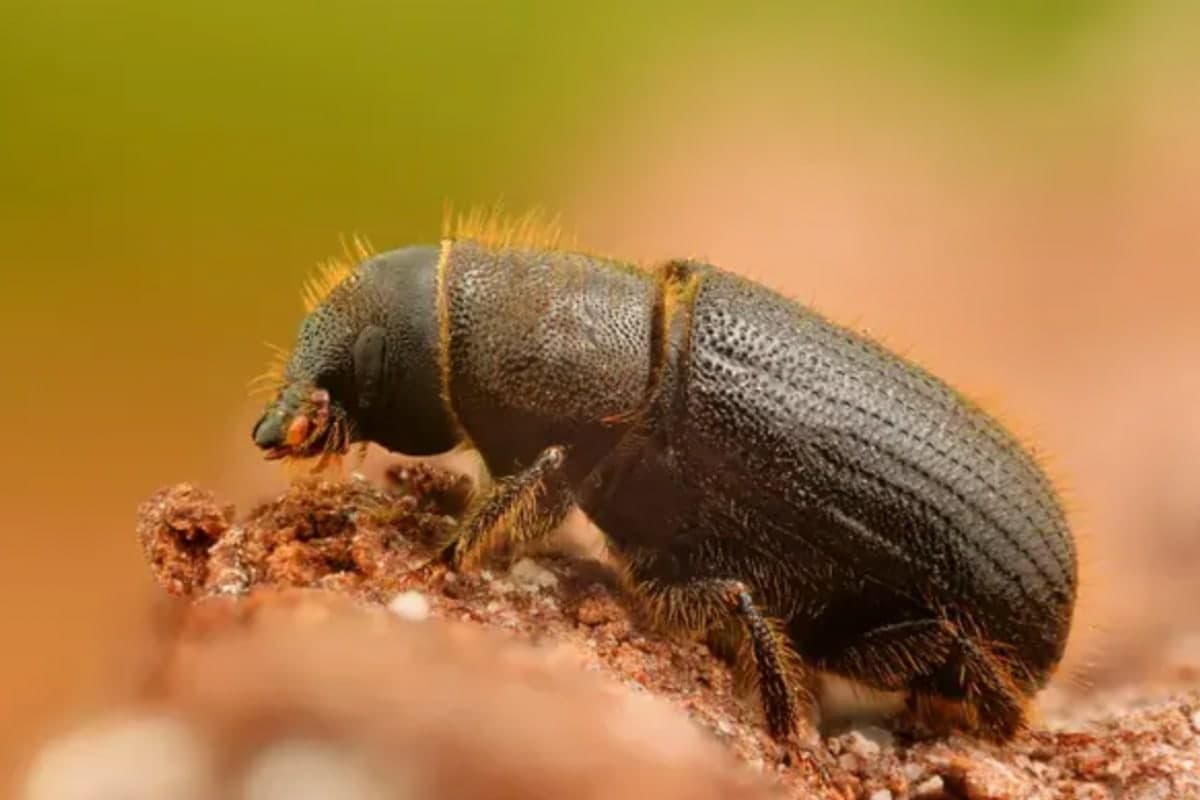
House borer
Round holes about 2mm across
The most common by a distance. Fine orange-ish frass around small round flight holes.
Two-toothed longhorn
Oval holes up to 7mm
A different beetle leaving similar damage. Larger, oval holes - easy to mistake for a bad borer problem.
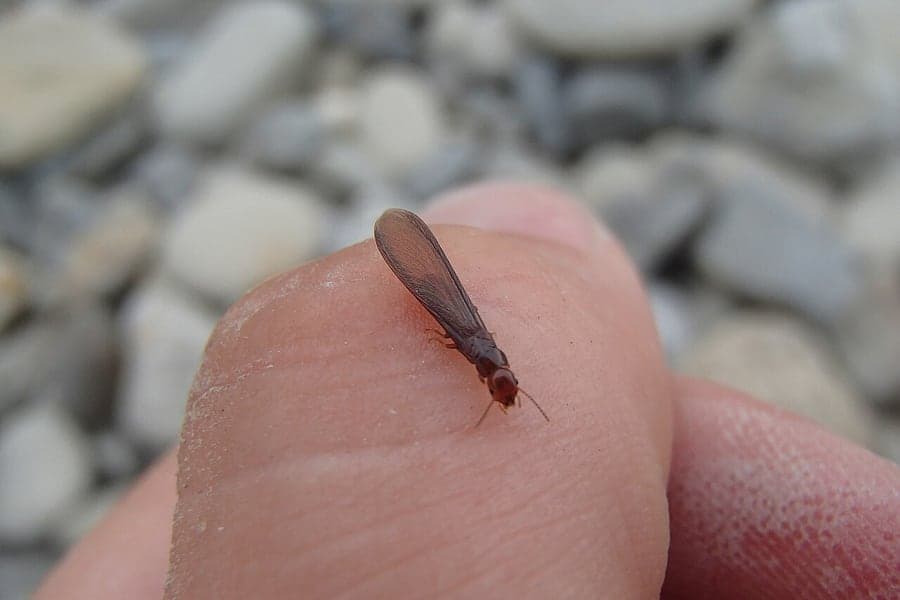
NZ drywood termite
Few holes, hard to spot
Yes, New Zealand has termites. They live in the same damp conditions as borer larvae, so they're rarely the only cause of damage - and because exit holes are few and hard to see, it can spread a long way before anyone notices.
Buildings closely surrounded by neglected shelter trees tend to be worse for all three. More on termites in New Zealand.
Qualified, accredited and accountable
 National Pest Management Association
 Pest Management Association of NZ
 Site Safe member
Get your free borer quote
ERMA-certified technicians · Rated by 385 Auckland customers on Google · Protection for 10 years or more, with no known pest resistance.
Prefer to talk? 0800 227 799
Borer treatment - common questions
How can I tell if I have an active borer problem?
Are borer dangerous to people?
How long does borer treatment last?
Can I treat borer myself?
Why do some boards get attacked and others don't?
Where in a house is borer most common?
Worth reading
- Signs of borer in your timberHow to tell whether borer is active or historic - what frass actually looks like, what hole size tells you, and why the hole appears years after the damage starts.
- What borer treatment costs, and what you're paying forWhat drives the cost of borer treatment in New Zealand - area of timber, bare versus finished wood, and why a cheap short-lived treatment costs more over time.
Think you've got borer?
We'll identify what's actually in the timber before anything gets treated.